State By State
Massachusetts Auto Insurance
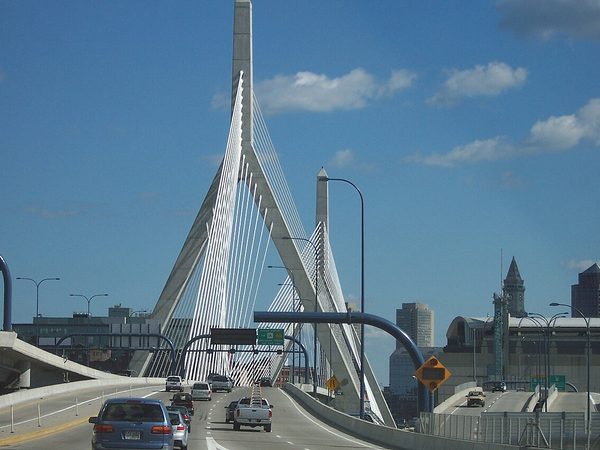
Massachusetts is a no-fault state. Drivers must carry at least 25/50/30 + $8,000 PIP in coverage, and the average full-coverage premium is $3,894 a year, 33% above the national average of $2,922. This guide covers what Massachusetts requires, what drivers pay, the rules on fault, uninsured drivers, penalties, teen drivers and phone use, and how to pay less.
Massachusetts car insurance at a glance
| Minimum coverage | 25/50/30 + $8,000 PIP |
| Fault system | No-fault |
| Average full coverage | $3,894 a year ($324 a month), 33% above the national average of $2,922 |
| Uninsured drivers | 7.9% (2023), the 45th highest rate of 51 |
| Filing after serious violations | Proof of financial responsibility, if ordered |
Minimum car insurance requirements in Massachusetts
Massachusetts requires $25,000 bodily injury liability per person, $50,000 per accident, $30,000 property damage liability, personal injury protection up to $8,000, and bodily injury caused by an uninsured auto of at least $25,000 per person and $50,000 per accident (Massachusetts Division of Insurance, "Basics of Auto Insurance" and 2025 mandatory coverage limits notice).
| Personal injury protection (PIP) | Up to $8,000 per person for medical expenses, up to 75% of lost wages, and replacement services, whoever caused the crash. |
The minimums are a legal floor, not a recommendation. Property damage limits in particular don't go far when a new car can cost more than the limit to replace, and anything above your limits is your personal responsibility. See how limits and deductibles work and every type of coverage explained.
How much car insurance costs in Massachusetts
The average full-coverage premium in Massachusetts is $3,894 a year, 33% above the national average of $2,922. That makes Massachusetts the 2nd most expensive of 49 (48 states plus D.C.; Alaska and Hawaii aren't in the data) (Experian, "Car Insurance Average Costs by State," published September 9, 2026; full coverage, 12 months to August 2026).
Within Massachusetts, prices still vary a lot by ZIP code, driving record and car, and 7.9% of drivers on Massachusetts roads were uninsured in 2023, so the coverage you choose matters as much as the premium.
Your own price depends on your ZIP code, age, driving record, car and coverage. Try our car insurance calculator with Massachusetts preselected for a personal estimate, and see what determines your car insurance cost.
Fault rules after an accident in Massachusetts
Massachusetts uses modified comparative fault with a 51% bar: your damages are reduced by your share of the blame, and you recover nothing if you are more than 50% at fault. (Matthiesen, Wickert & Lehrer, "Contributory Negligence/Comparative Fault Laws in All 50 States," updated June 10, 2026)
Uninsured drivers in Massachusetts
An estimated 7.9% of Massachusetts drivers were uninsured in 2023, the 45th highest rate among the 50 states and D.C. (Insurance Research Council, uninsured motorist estimates for 2023, via Insurance Information Institute "Facts + Statistics: Uninsured motorists"). Uninsured and underinsured motorist coverage protects you when one of them hits you. See coverage types.
Proof of insurance in Massachusetts
Every vehicle registered in Massachusetts must carry the compulsory coverages above for as long as it is registered. (Massachusetts Division of Insurance)
Penalties for driving without insurance in Massachusetts
A conviction for operating an uninsured motor vehicle brings a 60-day license suspension, and you become liable for the greater of $500 or one year's premium for compulsory insurance. (Massachusetts General Laws ch. 90 §34J; Mass.gov, "Massachusetts law about auto insurance")
A conviction for driving uninsured also follows you into your next policy. In CarInsurance.com's rate analysis, it raised the average full-coverage premium in Massachusetts from $1,726 to $2,717 a year, an increase of 57% (CarInsurance.com, "Penalty for driving without insurance in every state," updated March 24, 2026; rate analysis).
Beyond the penalties, driving uninsured leaves you personally liable for any damage you cause. See what happens if you drive without car insurance.
Proving financial responsibility in Massachusetts
If the Massachusetts Registry of Motor Vehicles requires proof of future financial responsibility after a serious violation, your insurer files it, and it must stay in force for the required period.
How insurers can set rates in Massachusetts
Massachusetts doesn't allow insurers to use gender or credit-based insurance scores to set car insurance rates, so your driving record, mileage, car and ZIP code carry more weight. (AgentSync (2026); Experian (2026))
Teen drivers in Massachusetts
Massachusetts uses graduated driver licensing (Insurance Institute for Highway Safety, "Graduated licensing laws" table):
- Learner's permit: from age 16; held for at least 6 months; supervised driving required: 40 hours.
- Intermediate (provisional) license: from age 16, 6 months. Night driving restriction: 12:30 a.m.-5 a.m. (between 12:30 a.m.-1 a.m. and 4 a.m.-5 a.m. the night driving and passenger restrictions are subject to (secondary enforcement); enforcement is primary at all other times). Passenger restriction: no passengers younger than 18 (between 12:30 am–1 am and 4 am–5 am the night driving and passenger restrictions are secondarily enforced; enforcement is primary at all other times).
- When restrictions lift: night, age 18; passengers, licensed for 6 months or age 18, whichever occurs first (min. age: 17).
Adding a teen is usually the biggest single increase in a family's premium. Keeping them on the family policy, a good-student discount and a safe, modest car help most.
Phone and texting laws for Massachusetts drivers
- Hand-held calls banned: yes, for all drivers.
- Law specifically bans holding any electronic device: yes.
- Texting and other use banned: reading; specifically applies to text.
- Hands-free use allowed: device allowed if operated without use of either hand except a single swipe or tap to activate or deactivate feature or function.
- Total device ban for novice drivers: yes, drivers younger than 18.
A distracted-driving ticket can count against your record and your premium. (Insurance Institute for Highway Safety, "Electronic device laws" table)
How to pay less for car insurance in Massachusetts
- Compare several insurers on identical limits and deductibles. Prices for the same driver vary widely.
- Protect your driving record. A single speeding ticket or at-fault crash can keep your price higher for three to five years.
- Ask what discounts you qualify for: bundling home and auto, insuring several cars, a clean record, a student's grades, anti-theft devices, or paying the term up front.
- Match coverage to the car: on an older, paid-off car, collision and comprehensive may cost more than they could pay out.
- Never let coverage lapse. Besides the penalties, a gap raises the price of your next policy.
See how to compare car insurance quotes, or get quotes for your ZIP code.
Where to get help
For questions about a policy, a claim or an insurer's conduct, contact the Massachusetts Division of Insurance. It handles consumer questions and complaints about insurers in Massachusetts.
Sources
- Massachusetts Division of Insurance, "Basics of Auto Insurance" and 2025 mandatory coverage limits notice
- Experian, "Car Insurance Average Costs by State," published September 9, 2026; full coverage, 12 months to August 2026
- Matthiesen, Wickert & Lehrer, "Contributory Negligence/Comparative Fault Laws in All 50 States," updated June 10, 2026
- Insurance Information Institute, "Background on: No-fault auto insurance"
- Insurance Research Council, uninsured motorist estimates for 2023, via Insurance Information Institute "Facts + Statistics: Uninsured motorists"
- Massachusetts General Laws ch. 90 §34J; Mass.gov, "Massachusetts law about auto insurance"
- CarInsurance.com, "Penalty for driving without insurance in every state," updated March 24, 2026; rate analysis
- AgentSync (2026); Experian (2026)
- Insurance Institute for Highway Safety, "Graduated licensing laws" table
- Insurance Institute for Highway Safety, "Electronic device laws" table
AutoInsuranceQuery editorial team. Last reviewed: September 29, 2026.